
Free on-site gate assessment - hinges, posts, and your LiftMaster or Nice gate operator checked before anything is quoted
The assessment is free and the quote is the invoice.
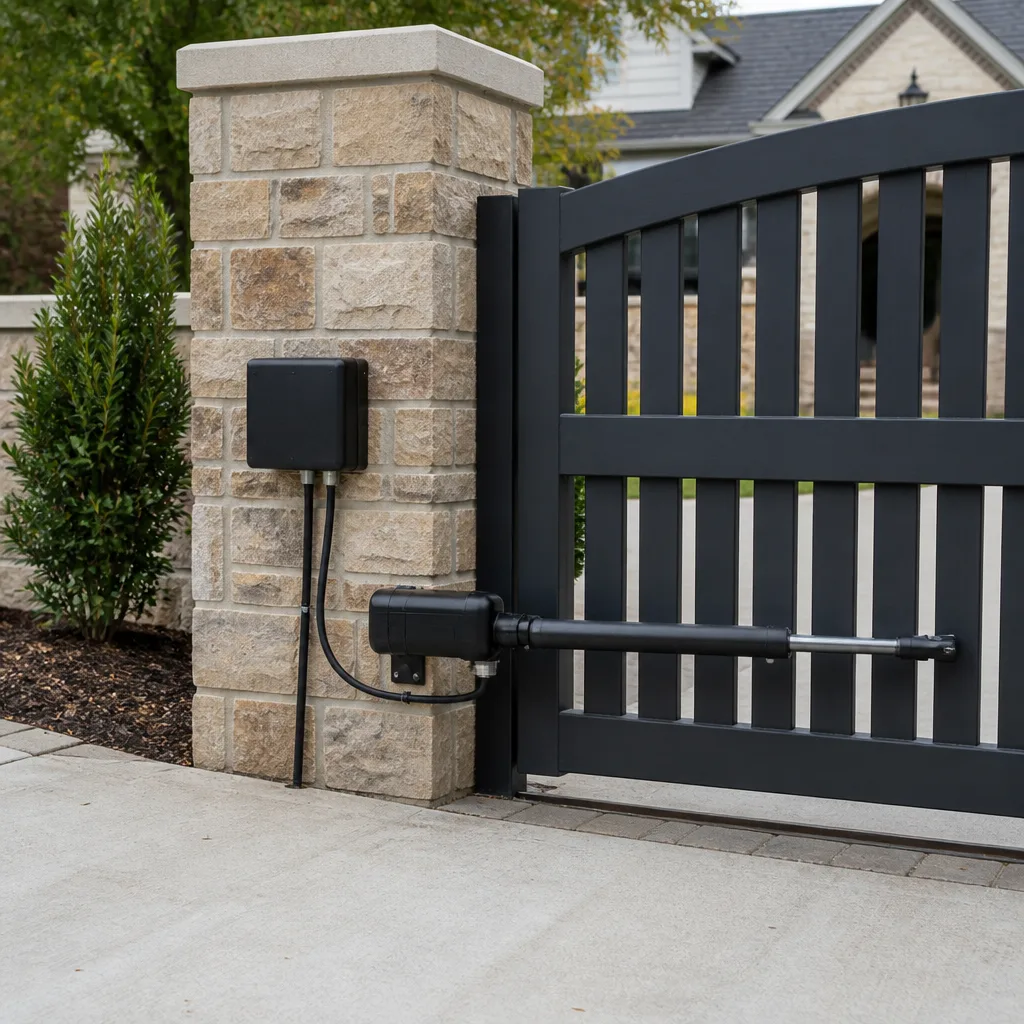
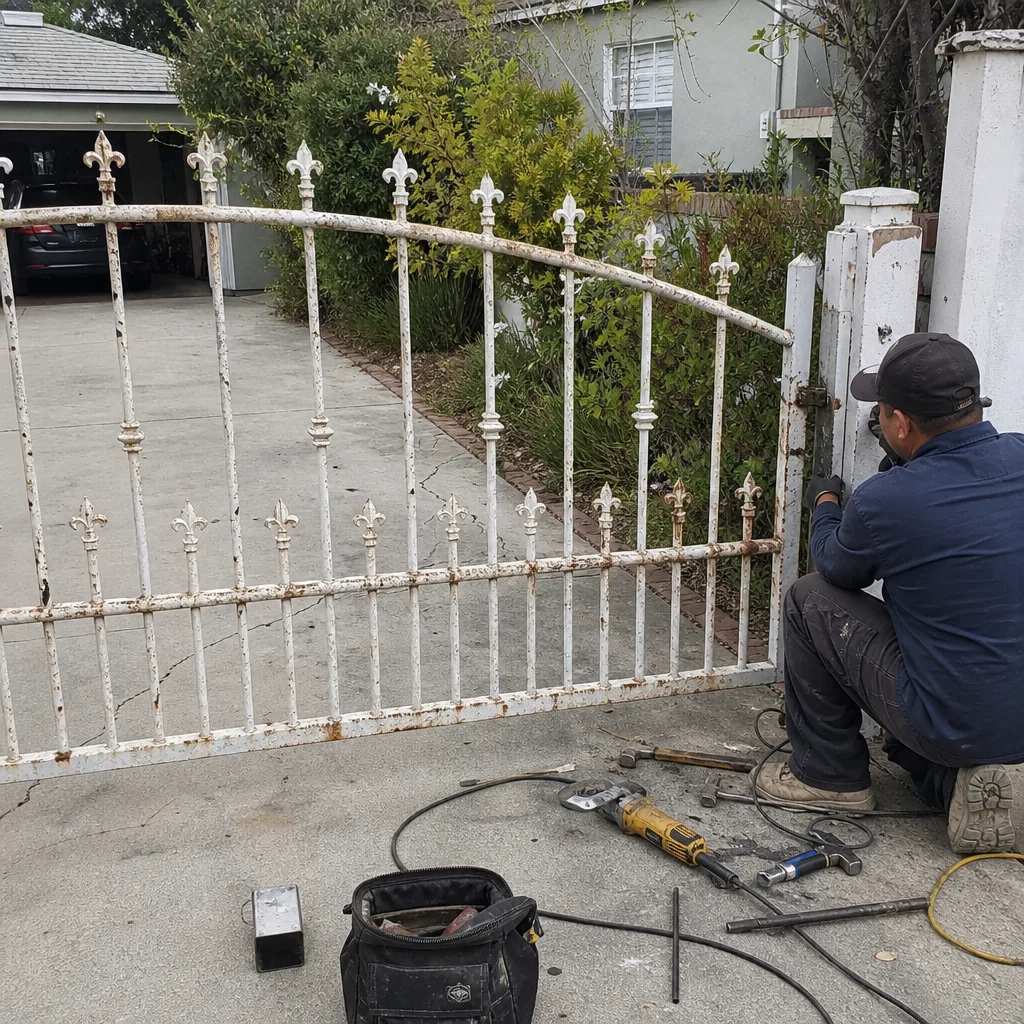 Before
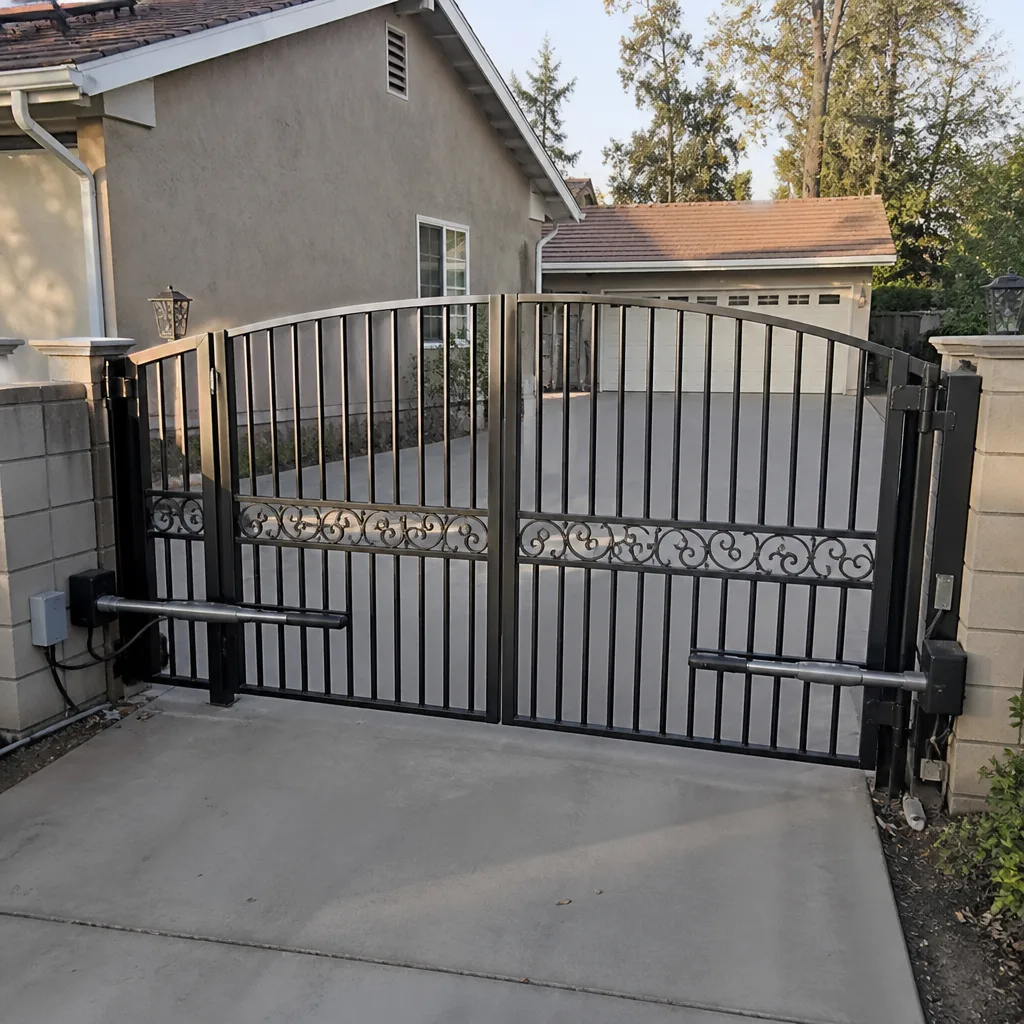 After
After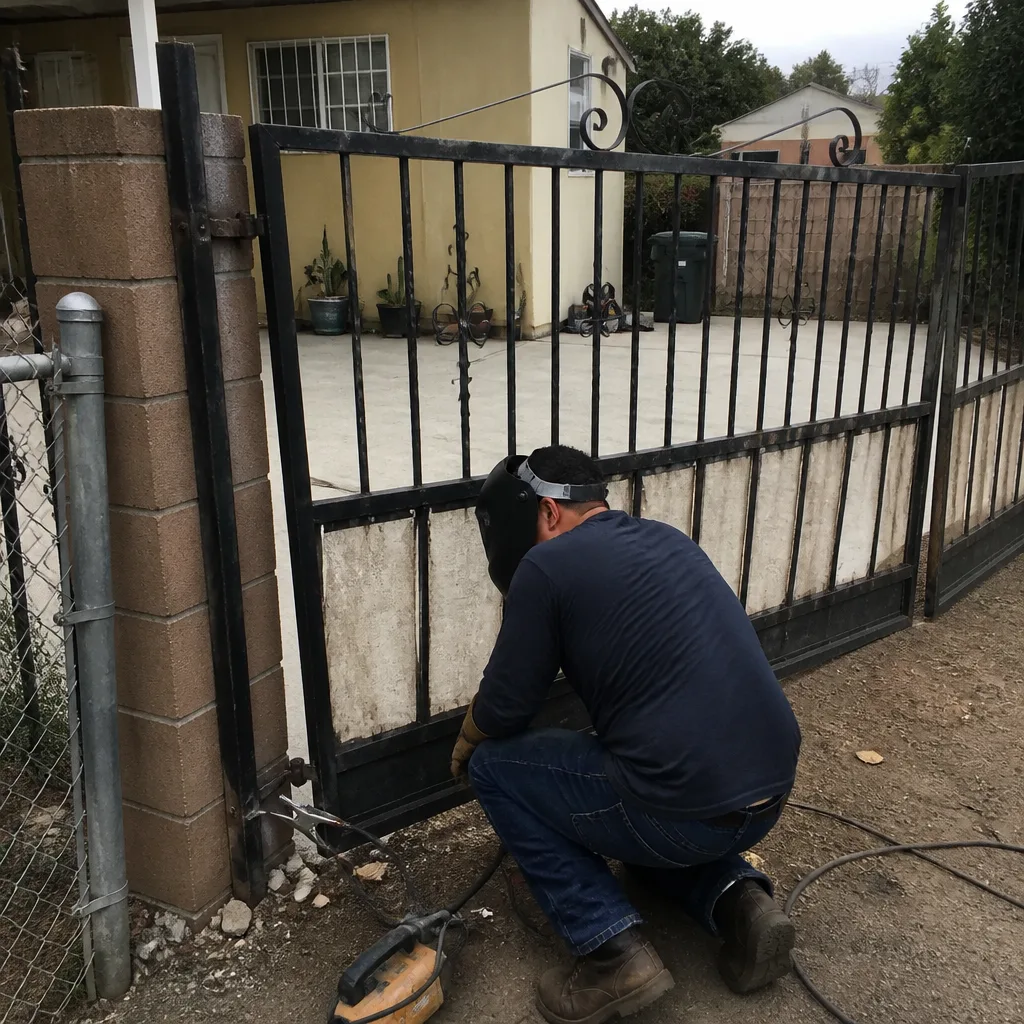 Before
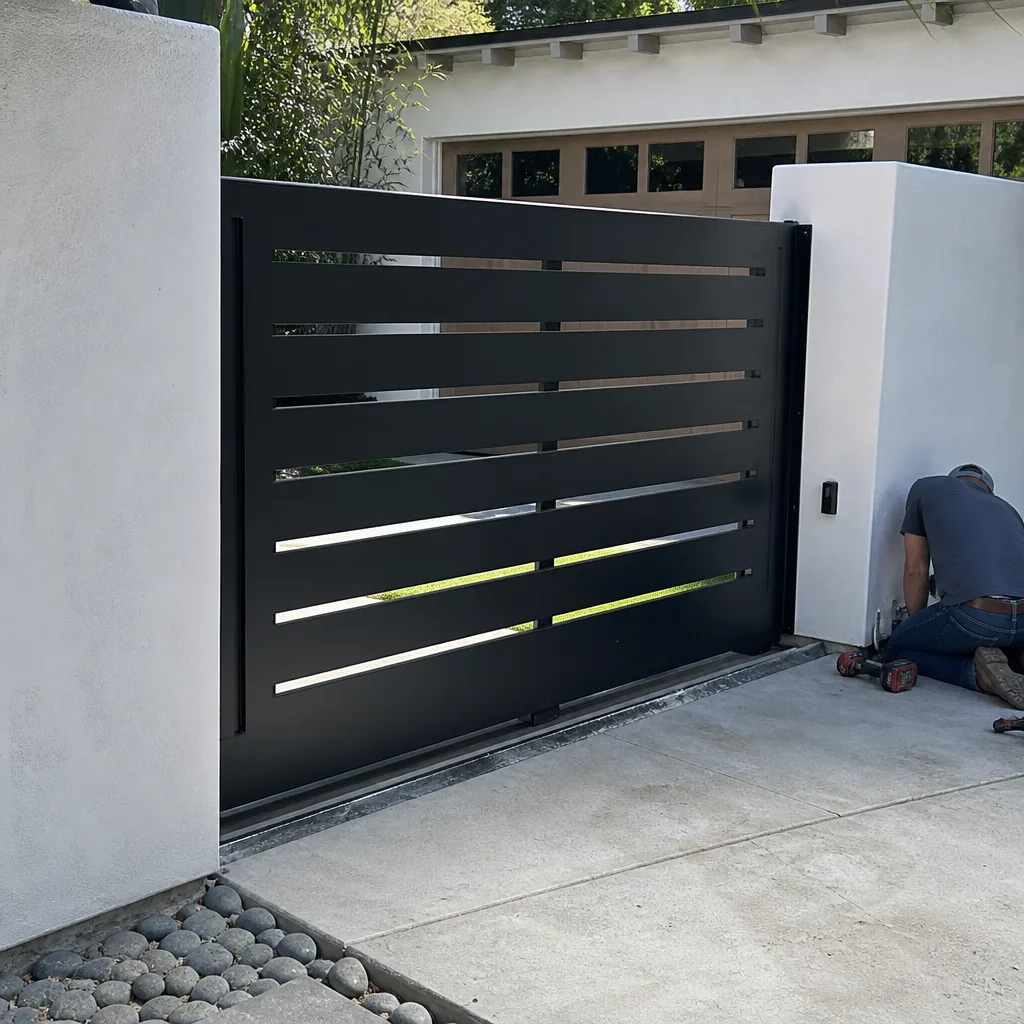 After
After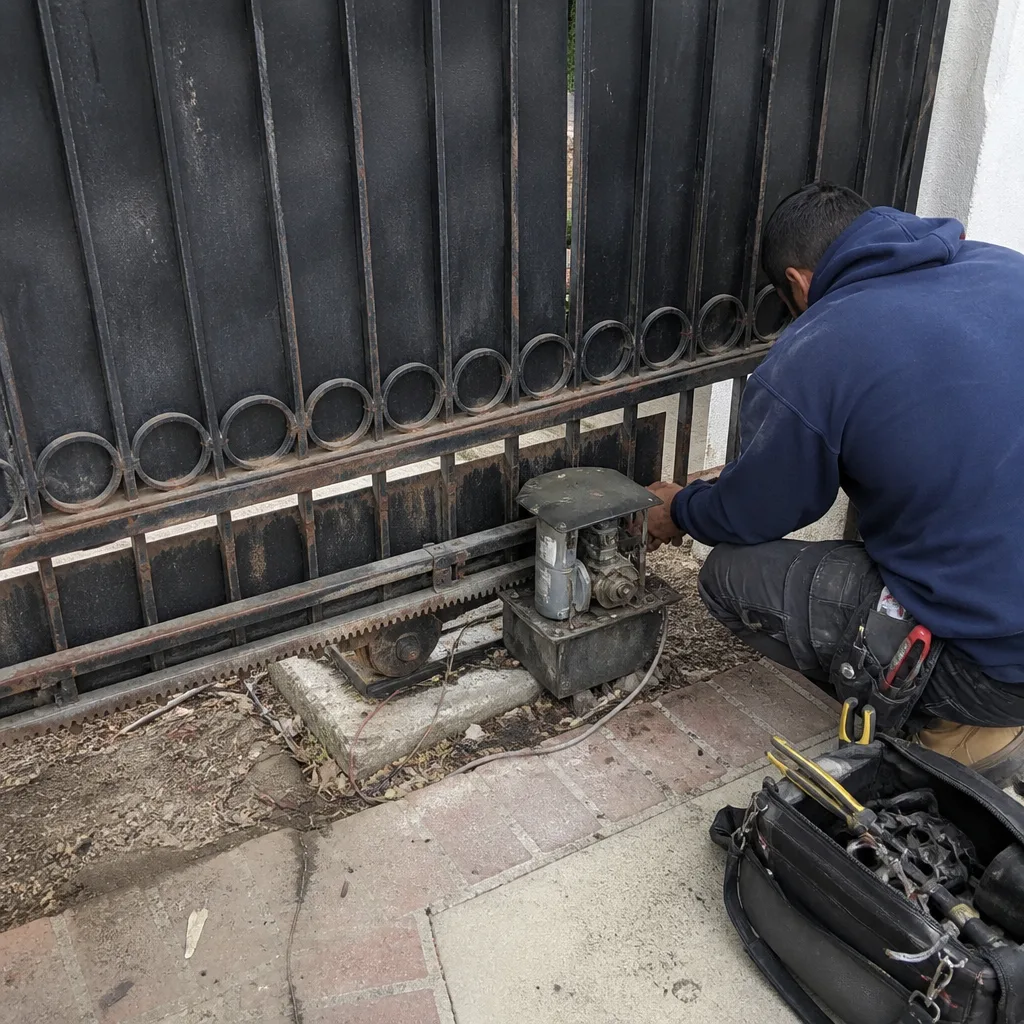 Before
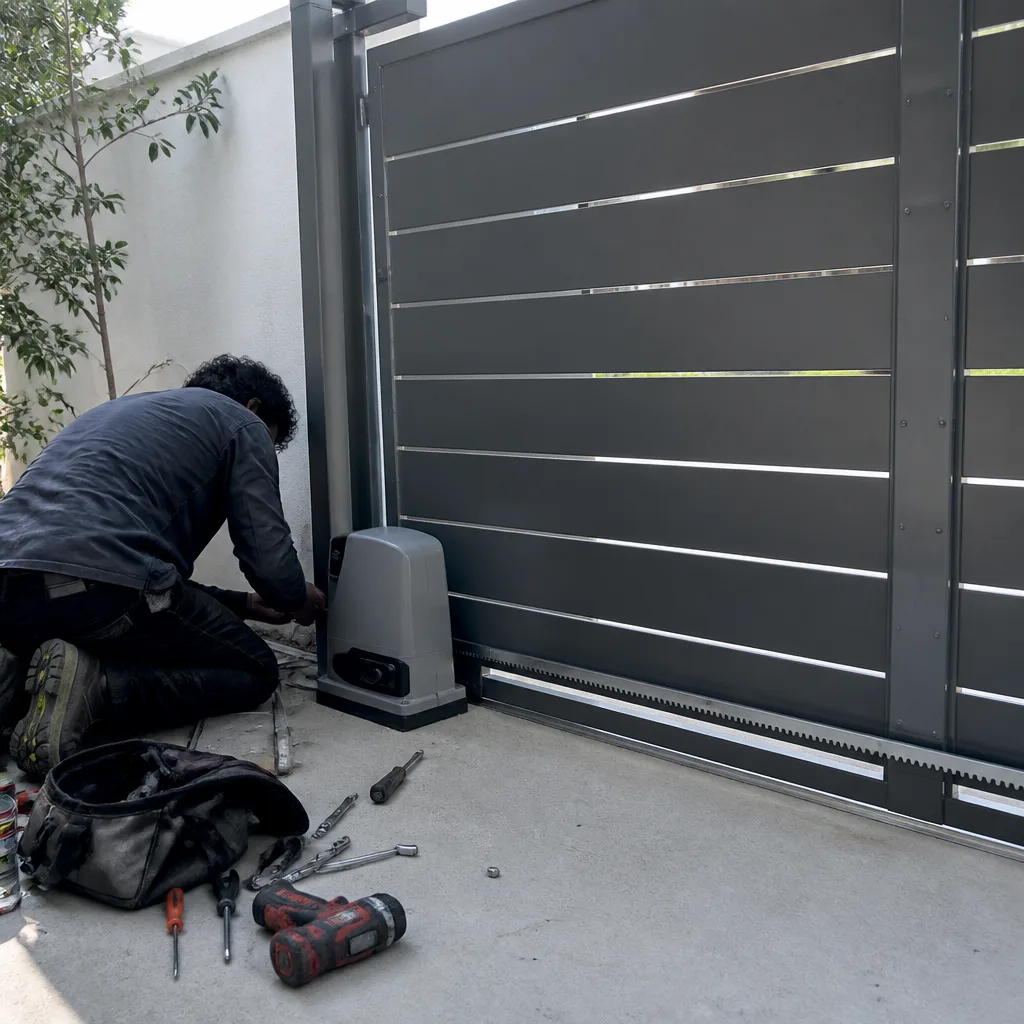 After
AfterLinear Hinge & Roller Replacement: The Los Angeles Owner’s Guide
Linear hinge and roller replacement in Los Angeles typically runs $145 to $385 installed per gate, depending on whether we’re swapping just the rollers or rebuilding the hinge post hardware, and most jobs are done the same day we show up. You’ll usually know the part has failed because the gate starts dragging on the ground, squealing like a box of angry mice, or hanging crooked enough that the latch won’t line up anymore. We stock Linear-compatible hinges and rollers on the truck, we’ve been fixing them in driveways across Los Angeles since 2001, and we’ll match the part to your model before we touch a single bolt.
What most owners don’t realize until it’s too late is that these two parts fail as a team. The roller wears flat on one side and stops rolling, which puts side pressure on the hinge, which wallows out the bushing, which drops the whole gate another half inch. Then the motor strains against the drag, the safety edges start false-triggering, and you’re standing in the driveway wondering why a gate that worked for 12 years suddenly can’t close without help. That’s the Linear story we see over and over in Los Angeles.
Which Linear Models This Applies To
We work on hinges and rollers across the Linear gate operator lineup you actually find in Los Angeles yards: the LRA and LRA-S swing arm operators, the G-series and SL-series slide gate operators, and the older ACT and Apollo-compatible arms that Linear absorbed years back. The hinge side is mostly standard residential and light-commercial hardware – 4-inch to 6-inch barrel hinges, weld-on or bolt-on depending on how the original installer did it. The roller side gets more specific: Linear slide gates generally take a 3-inch or 4-inch steel-bearing roller, but the mounting plate spacing changed between the mid-2000s and later production runs, and one does not simply bolt onto the other without drilling new holes.
Here’s the compatibility gotcha that saves people a second trip: measure the roller’s center-to-center mounting bolt spacing before you order anything. Early Linear slide kits used a narrow 2-3/8 inch plate, newer kits use a wider 3-inch plate. Order the wrong one and you’ll be back at the parts counter with a greasy bracket that doesn’t fit. We carry both on the truck because we’ve made that mistake for enough Los Angeles homeowners over the years that stockin’ the pair just made sense.
On OEM versus aftermarket: Linear’s own rollers are fine, but so are the quality aftermarket equivalents from suppliers we’ve vetted over the years. The truth is the steel-bearing roller itself rarely fails first. What goes first is the bracket the roller sits in, especially on gates exposed to coastal air near places like Playa del Rey where salt eats the zinc plating in three or four years. For hinge replacement specifically, we lean toward weld-on hinge rebuilds rather than bolting on a taller plate to compensate for wear. Hal’s been doing this long enough to spot a gate that’s been “fixed” three times by stacking shims under the hinge post, and it never lasts. Rebuild the hinge point properly and the gate stops fighting itself.
Signs Your Linear Hinge & Roller Replacement Is Failing
- Gate drags on the ground or scrapes the concrete. The roller has either worn flat or the bracket has bent from years of holding weight it wasn’t rated for. The hinge starts carrying the dead load and wears faster.
- Squealing or grinding when the gate moves. Most Linear slide gates have sealed bearings that run quiet. When they scream, the bearing is either dry or the inner race has pitted, and both mean the roller is done.
- Gate sags visibly at the latch end. That’s not a middle-of-the-gate problem, that’s a hinge bushing problem. The weight pulls the free end down because the hinge pin and bushing have wallowed out.
- Latch won’t line up with the catch anymore. The gate hasn’t moved; the hinge has. A quarter inch of hinge wear translates to two or three inches of drift at the latch end.
- Opener motor trips the breaker or runs hot. A dying roller adds drag, drag adds amp draw, amp draw trips breakers. The motor is the symptom, not the cause.
Whichever of these shows up first, the fix is almost always cheaper than the damage if you catch it early. When the gate finally droops enough to snap a weld at the hinge post, you’re into a welding call and likely a post inspection, not just a parts swap.
Replacement Cost & What’s Included
In Los Angeles, a straight roller replacement – one or two rollers, same footprints, no post work – usually lands between $145 and $225 installed. When we’re doing both hinges and rollers with a proper weld-on hinge rebuild, the bill runs $260 to $385 for a single driveway gate. Double gates that share a post are a little less per side since we’re already there with the gear out.
- Roller replacement (single gate): $145-$225
- Hinge rebuild, weld-on, both hinges: $210-$320
- Full hinge + roller replacement: $260-$385
That price includes the parts, the labor, and the 90-Day Done Right Promise in writing. You’ll know the price before we start, and the price you’re quoted is the price you pay – no trip charge inside the county, no “discovered conditions” add-on at the end. If a roller’s bad but the hinge still has life in it, we’ll tell you to keep the hinge. We don’t swap parts that don’t need swapping, because fixing what’s actually broken is cheaper for you and less embarrassing for us later.
For Los Angeles gates near the coast, we also mention this every time: if the old bracket is rusted through, expect the new one to need occasional attention too. Salt air accelerates the failure cycle. We’ll set the new hardware so you can see and reach it for a yearly shot of lubricant, and we’ll show you exactly where to spray before we leave.
DIY or Call Us?
What you can safely do yourself is identify the problem. Look at the roller and see if it’s spinning or sliding. Grab the gate at the latch end and lift. If it moves up more than a quarter inch, you’ve got hinge wear. That observation costs you nothing and helps us show up with the right parts. What we don’t recommend is the actual hinge work. A residential gate panel weighs 300 pounds or more. When the hinge bolts let go or a weld breaks, that weight has to go somewhere, and it’ll go toward whoever is standing under it.
The rollers are less dangerous but still awkward. The gate sits on them under tension of its own weight, and jacking a slide gate up off its track without supporting the panel evenly is how people get pinched fingers and bent racks. If you want to try, we won’t talk you out of it, but know that the truck probably already has the part you need. Call (877) 610-2993 and we’ll tell you over the phone if it sounds like a simple roller or something deeper. You can also read the model plate to us and we’ll tell you what parts fit before anyone drives anywhere.
FAQs
Linear gate rollers and hinges in Los Angeles last 8 to 14 years on average, with coastal gates wearing toward the shorter end and Valley gates toward the longer end. Rollers wear out faster than hinges in most cases, and gates that are never lubricated can kill a roller in five years. If your gate was installed before 2015, and you’re noticing drag or noise, it’s probably time to look at the parts rather than wait for the failure.
A worn Linear hinge or roller can sometimes be repaired in place, but most of the time replacement is the cheaper and more honest fix. We might get another year out of a roller by cleaning and re-greasing the bearing, but if the bracket is bent or the race is pitted, that part is done. Hal’s rule is simple: if repair means the gate stays half-worn and you’re calling us again next summer, we’ll recommend the replacement and tell you why. You can always ask for the repair option and we’ll respect it, but we won’t pretend it’s the permanent fix.
A Linear hinge and roller replacement on a single residential gate takes 1.5 to 3 hours once we’re on-site, depending on whether the hinge post needs weld work. Rollers alone can be done in under an hour. If the original installer used non-standard hole spacing, expect us to drill new mounts and re-set the roller height, which adds a little time but makes the gate roll true afterward.
We stock the common Linear-compatible hinge and roller sizes on the truck, including both the narrow and wide roller plate spacing. If your gate has an obscure bracket or an older ACT-era mount, we’ll source the exact part and schedule the install. We also carry parts for LiftMaster, Mighty Mule, and Ghost Controls gates, so if you have more than one gate that’s been neglected, one visit can knock out both.
Call (877) 610-2993 and tell us what your gate is doing. We’ll give you an honest answer about whether you’re looking at a $150 roller or a $350 hinge rebuild, and if you want a second opinion on someone else’s written estimate, bring it to Hal at the shop. The estimate check costs nothing, and the 90-Day Done Right Promise isn’t a selling line – it’s on every invoice we write.
Written by Hal Gatewood, Owner, Gatewood Fence & Gate at Gatewood Fence & Gate, serving Los Angeles and nearby areas.