
Free on-site gate assessment - hinges, posts, and your LiftMaster or Nice gate operator checked before anything is quoted
The assessment is free and the quote is the invoice.
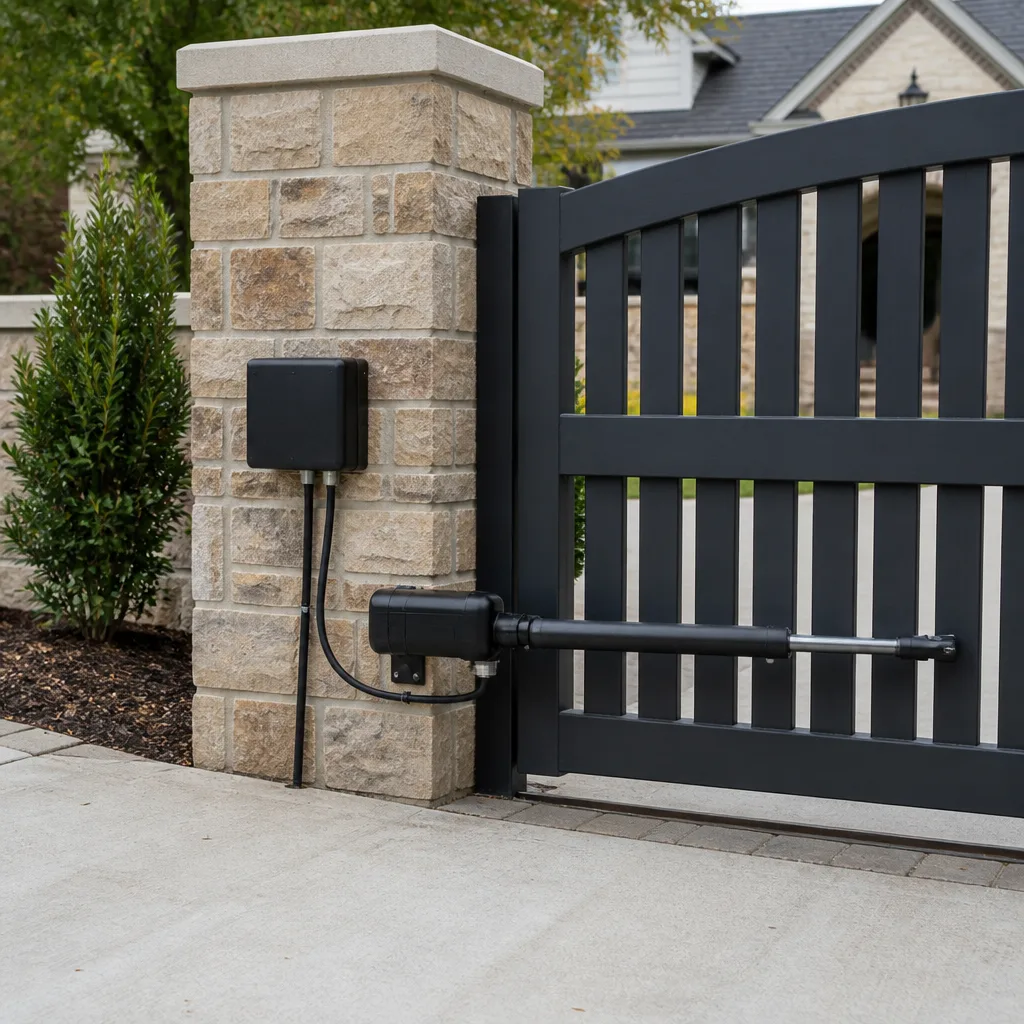
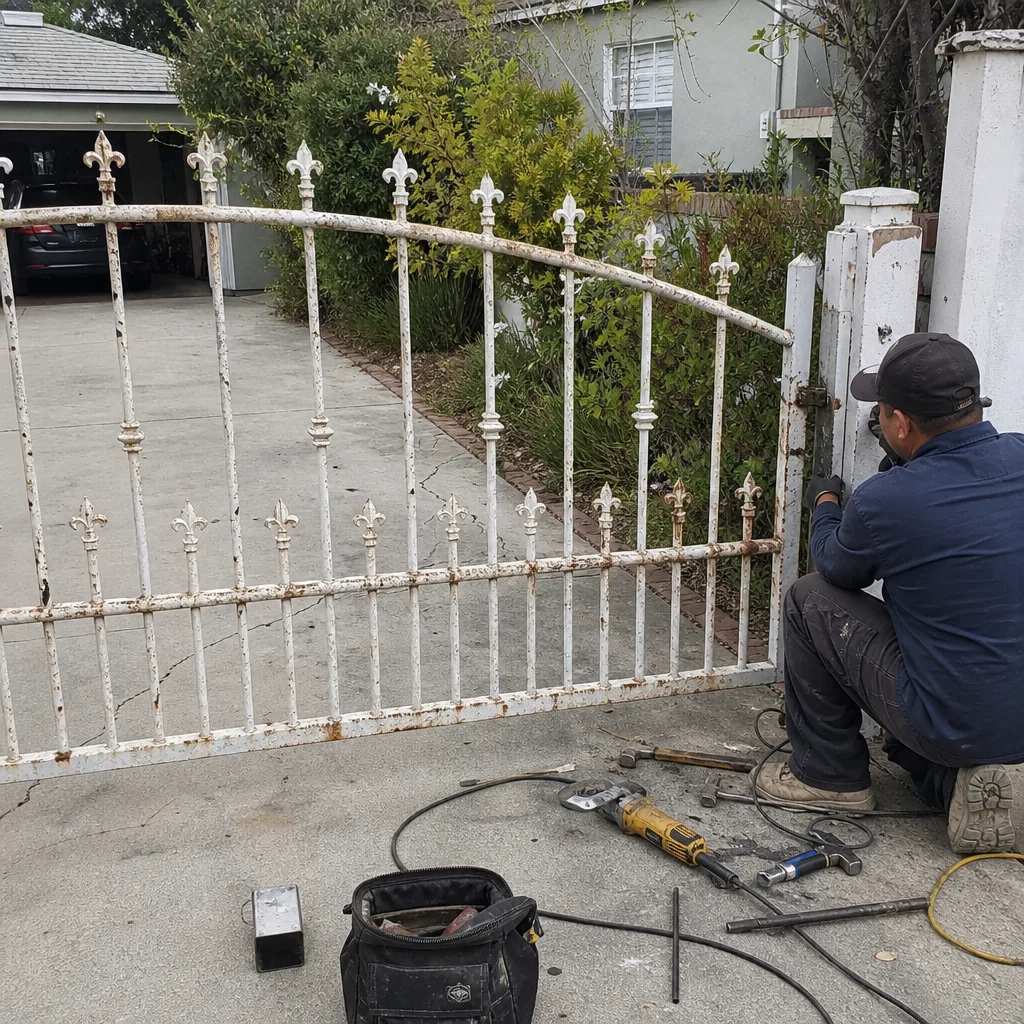 Before
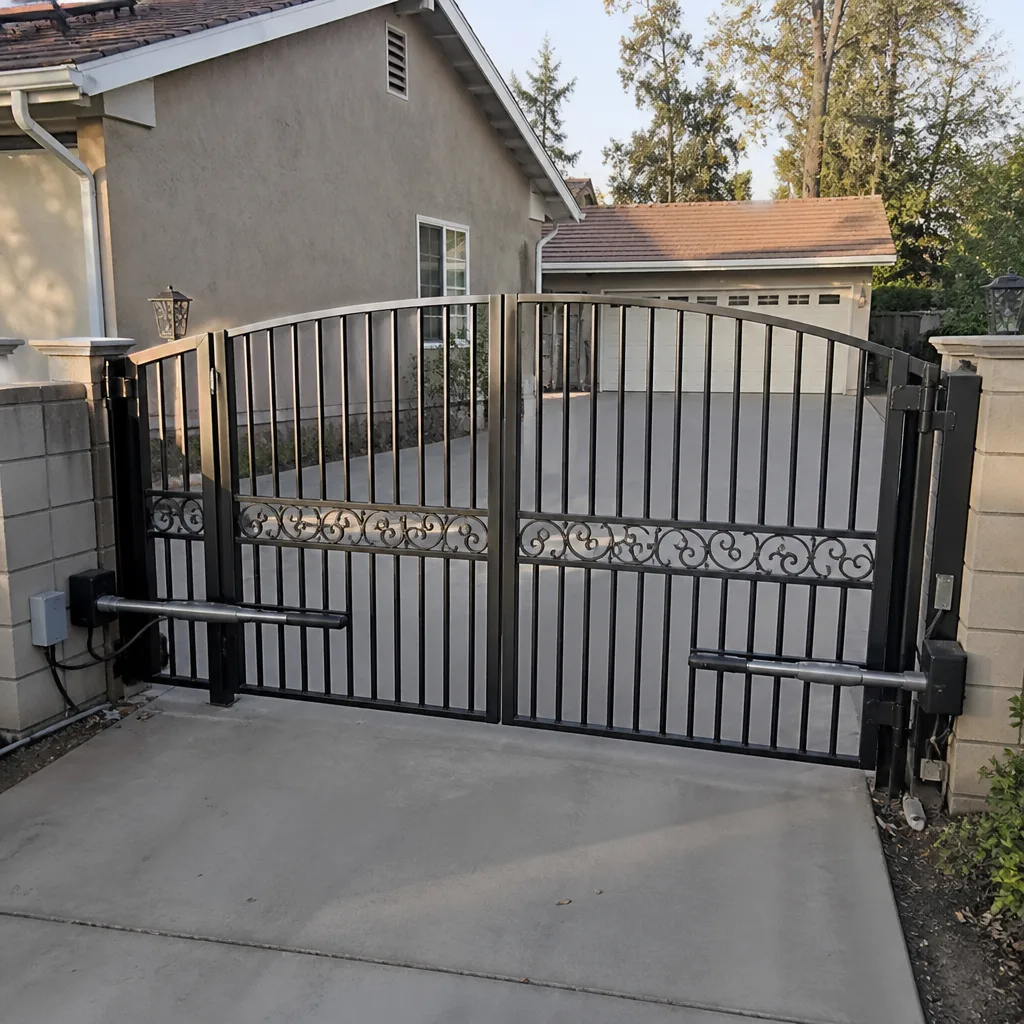 After
After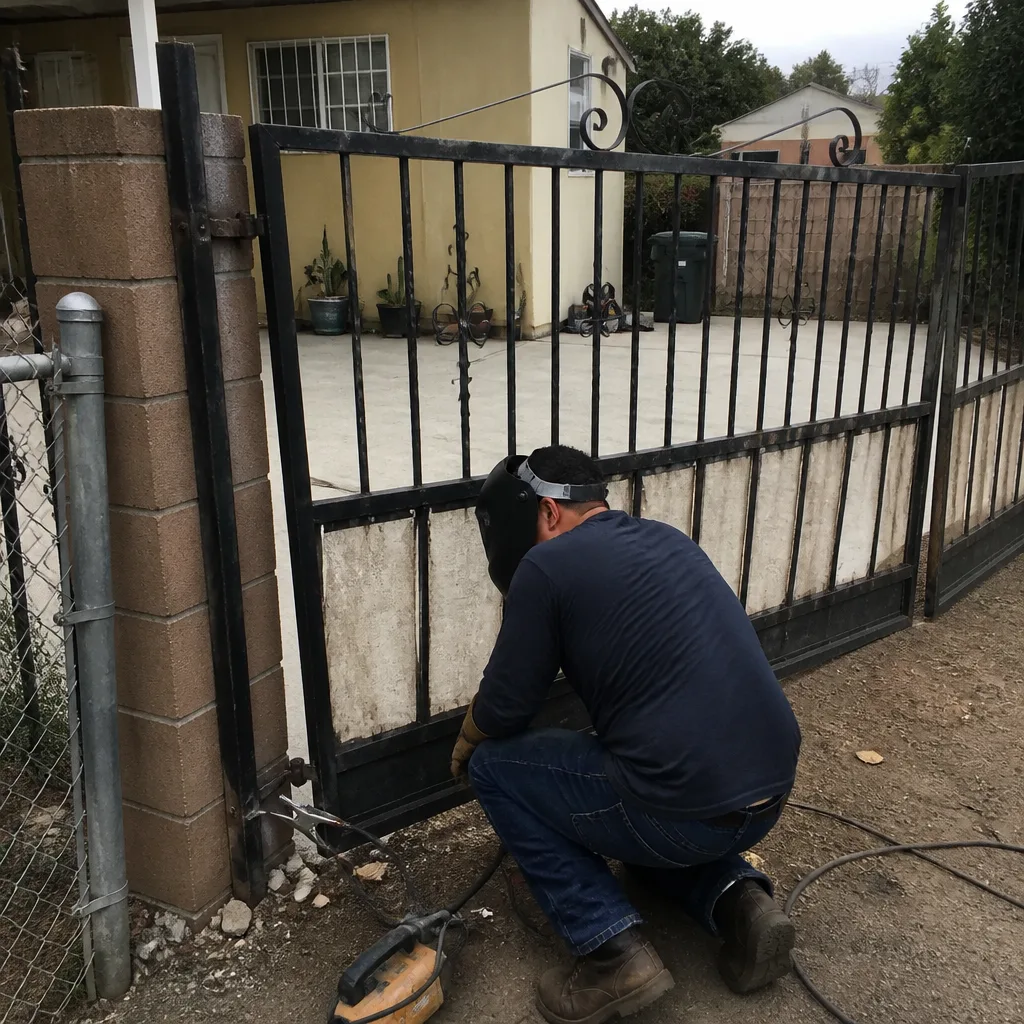 Before
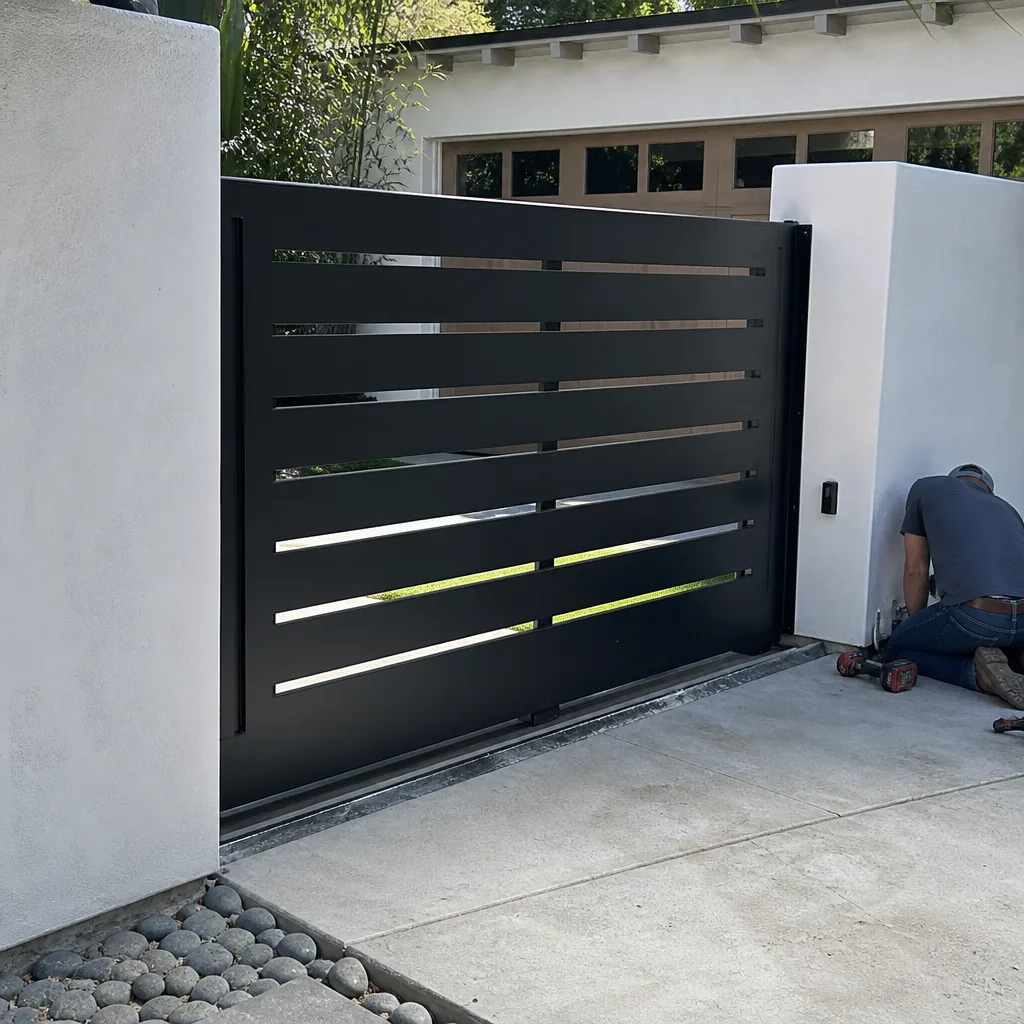 After
After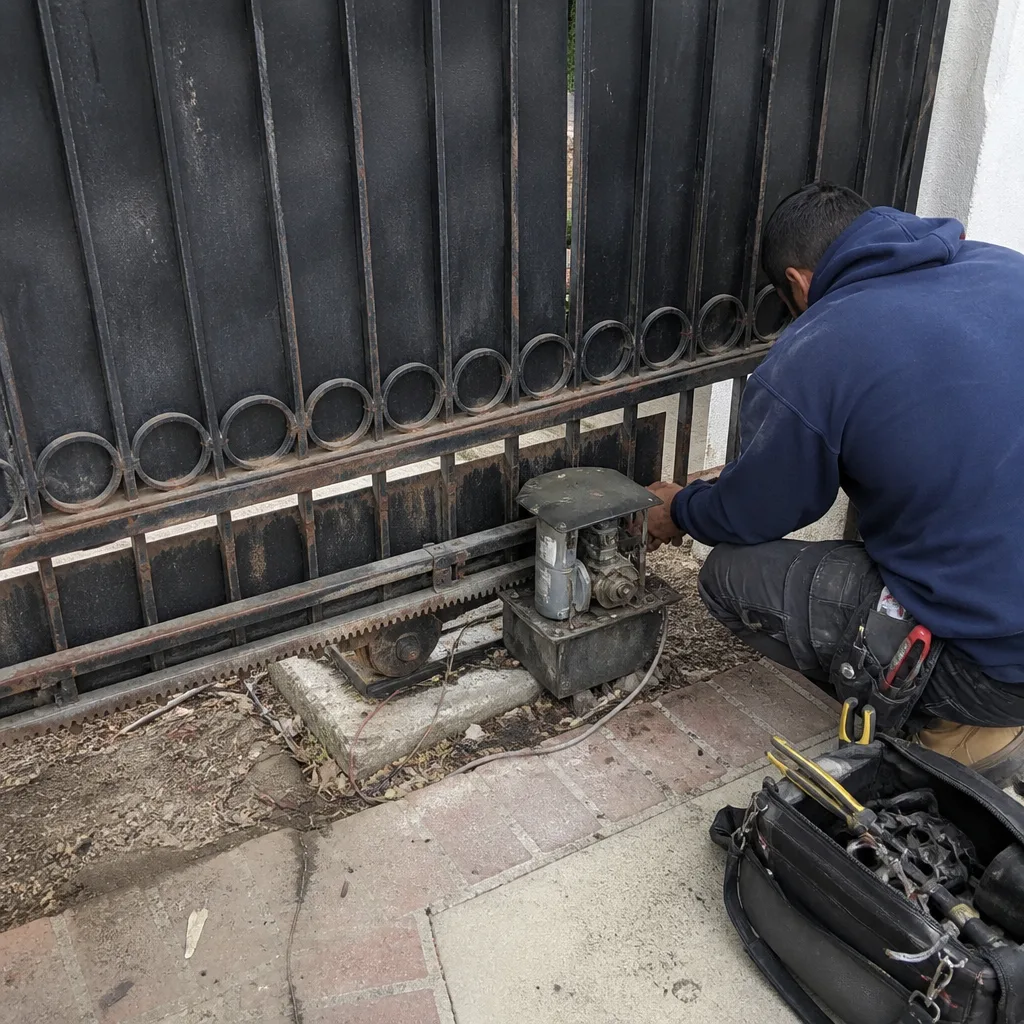 Before
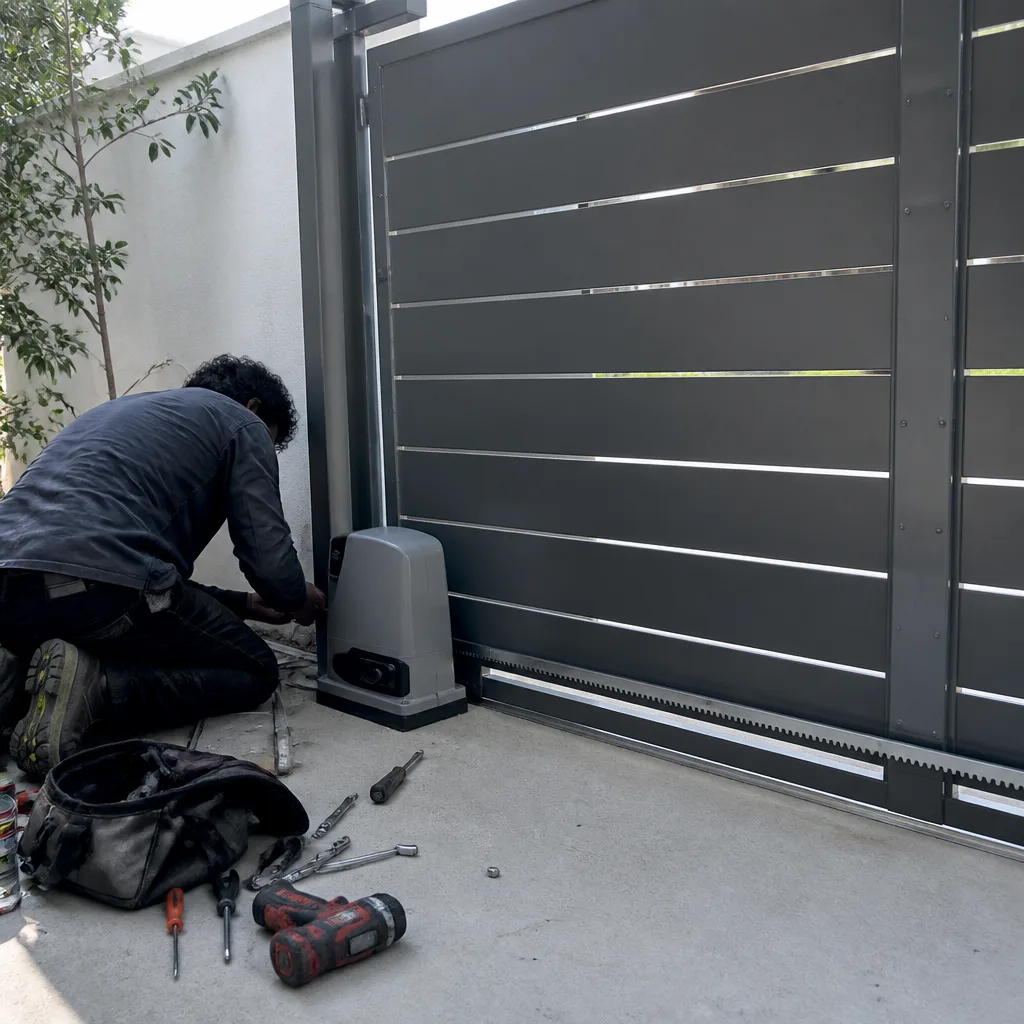 After
AfterFAAC Hinge & Roller Replacement: The Los Angeles Owner’s Guide
FAAC hinge and roller replacement in Los Angeles typically runs $240 to $480 installed, depending on the gate’s weight and which FAAC series you own. We stock FAAC-compatible hinge and roller kits on the truck, and in most cases Hal or one of the crew can have the gate swinging clean again the same day he arrives. What owners usually notice first isn’t the part itself. It’s the sound: a low groan when the gate moves, or a shudder half way through its travel. By the time that happens, the roller has usually worn flat on one side and the hinge pin has started eating into the bracket. The gate still opens, so it’s easy to put off. But every week it runs like that, the wear spreads. A hinge that’s loose at the end lets the gate drop, and then the opener is fighting weight it was never designed to carry.
Which FAAC Models This Applies To
Hinge and roller wear shows up most often on FAAC swing gate operators from the 400, 750, 760, and 770 series, along with the older 390 and 412 automations that are still running all over the San Fernando Valley and the west side. The hinge side of this job follows the gate construction, not the operator. If your gate is a welded steel frame with bearings or oilite bushings at the hinge post, that’s one hardware family. If it rides on a bottom roller or a cantilever setup, the part match is different. The FAAC operator itself doesn’t care which hinge you use, but it does care whether the gate travels freely. A hinge with even a quarter inch of play changes the geometry the operator was calibrated for.
Here’s the compatibility gotcha we run into constantly in Los Angeles: the hinge and roller aren’t sold as a matched FAAC kit. FAAC supplies the motor, the control board, the photocells, the arms. The physical swing hardware usually came from the gate fabricator, and a lot of those fabricators used whatever they had on the truck that week. So the first step is identifying what’s actually installed. We measure the hinge pin diameter, the barrel length, the bracket bolt spacing, and the roller’s axle diameter and load rating. From there we either match it with a proper OEM-spec replacement or a quality aftermarket part that fits the same footprint. For FAAC operators specifically, we prefer bearings or oilite bushings that match the original load spec, because an undersized replacement hinge will wear out in two summers and you’re paying twice.
Signs Your FAAC Hinge & Roller Replacement Is Failing
- Groaning or grinding during travel. The hinge pin has worn egg-shaped inside the barrel, or the roller has crusted up and is sliding instead of rolling. Metal on metal, no lubrication left. The sound tells you which side is failing before you even look.
- The gate shudders or stutters part way through its arc. A worn roller creates a flat spot, and every time the gate hits that flat spot it hangs. The FAAC operator feels that resistance and tries to push through it, which is why the shudder usually shows up before the gate actually stops.
- The gate visibly sags at the latch end. Check the gap at the latch post. If it’s tighter at the bottom than the top, the hinge post hardware is giving up. The gate didn’t bend. The hinge did. That’s a good thing, because hinges are cheaper than gate frames.
- The operator trips or faults intermittently. FAAC boards read motor current. When a hinge binds, the board sees a spike and assumes an obstruction. The gate reverses or locks out. Homeowners replace the board or the capacitor. The problem was mechanical all along.
- You can feel play when you grab the gate and rock it. This test takes ten seconds: grab the latch edge and push side to side. Movement at the hinge of more than a pencil lead’s width means the bushing or bearing is beyond its service life. On a double gate, test both panels separately.
Replacement Cost & What’s Included
For Los Angeles, plan on $240 to $480 installed for a typical single gate hinge and roller replacement. A double gate roughly doubles the parts, but labor comes in a little under double since the job is already set up. Here’s a plain breakdown of what drives that range:
| Item | Typical Los Angeles Range |
|---|---|
| Hinge replacement (single, welded steel gate) | $120 - $220 |
| Roller replacement (single, bottom or cantilever roller) | $80 - $150 |
| Both hinge and roller, single gate | $200 - $370 |
| Heavy custom gates, double gates, or post repair | $370 - $480+ |
The range is wide because Los Angeles gates are built to wildly different standards. A hollow-core aluminum gate from the 90s weighs a third of a solid tubular steel job. Post condition matters too. If the hinge bolt holes in the post are wallowed out, we weld in a reinforcement plate before mounting the new hinge, otherwise the new part dies young. Every quote is given upfront, in writing, and agreed before any work starts. There’s no surprise line item at the end. And the work, including the hardware we install, is covered by the 90-Day Done Right Promise in writing. If it’s not right, one call brings Hal back.
DIY or Call Us?
What you can safely check: the rock test I described above. Look for cracks around the hinge plate. Look at the roller surface. That’s diagnostic work and it’ll tell you whether this is a $240 job or a bigger one. What goes wrong with DIY replacement is the gate’s weight. A 16-foot steel gate can weigh 600 pounds or more. When the hinge is unbolted, that weight has to be supported. If it shifts, you’re dealing with a crushed foot, a bent post, or a pinched crush zone at the hinge gap. Secondary risk: the FAAC operator. If the gate travels even slightly out of alignment after a home-brew hinge swap, the operator fights it and the board burns out. That’s a $400 board fried to save a $200 labor charge. We’ll always tell you if the job is honestly simple, but hinge and roller replacement on powered gates is one we’d rather do for you. If you’re anywhere in Los Angeles, call (877) 610-2993 and Hal will look at it. If it turns out to be a five-minute adjustment, that’s what you’ll pay for.
FAQs
A quality hinge and roller on a FAAC swing gate in Los Angeles typically lasts 8 to 12 years. The two things that kill them early here are coastal air near Santa Monica and Playa del Rey, which accelerates corrosion, and the clay-heavy ground in the Valley that shifts with every wet-dry cycle and slowly torques the hinge post. If the gate was installed with undersized hardware, you’ll see failure in 3 to 5 years. Call (877) 610-2993 and we’ll tell you if the part you have is worth replacing or whether it was wrong from day one.
Sometimes. If the hinge pin is worn but the barrel and bracket are solid, we can press in a new pin and bushing and you’ll pay less than a full replacement. If the barrel itself is egged out or the bracket is cracked, replacing the hinge is the only repair that won’t come back in a year. We’ll show you the part, tell you which situation you have, and quote the fix before any work starts. Free estimates at (877) 610-2993.
A single gate hinge and roller replacement on a FAAC operator takes about two to three hours on site, including unbolting the panel, supporting it, swapping hardware, realigning, and recalibrating the operator’s travel limits. Double gates or post repair add another hour or two. Most jobs are done in one visit.
Yes. We carry common FAAC-spec hinges, rollers, oilite bushings, and bearing kits on the truck, along with steel plate for post reinforcement. If your gate uses something unusual, we’ll source it from our Los Angeles suppliers and come back ready. The price is quoted in writing before we touch the gate.
Written by Hal Gatewood, Owner, Gatewood Fence & Gate at Gatewood Fence & Gate, serving Los Angeles and nearby areas.